
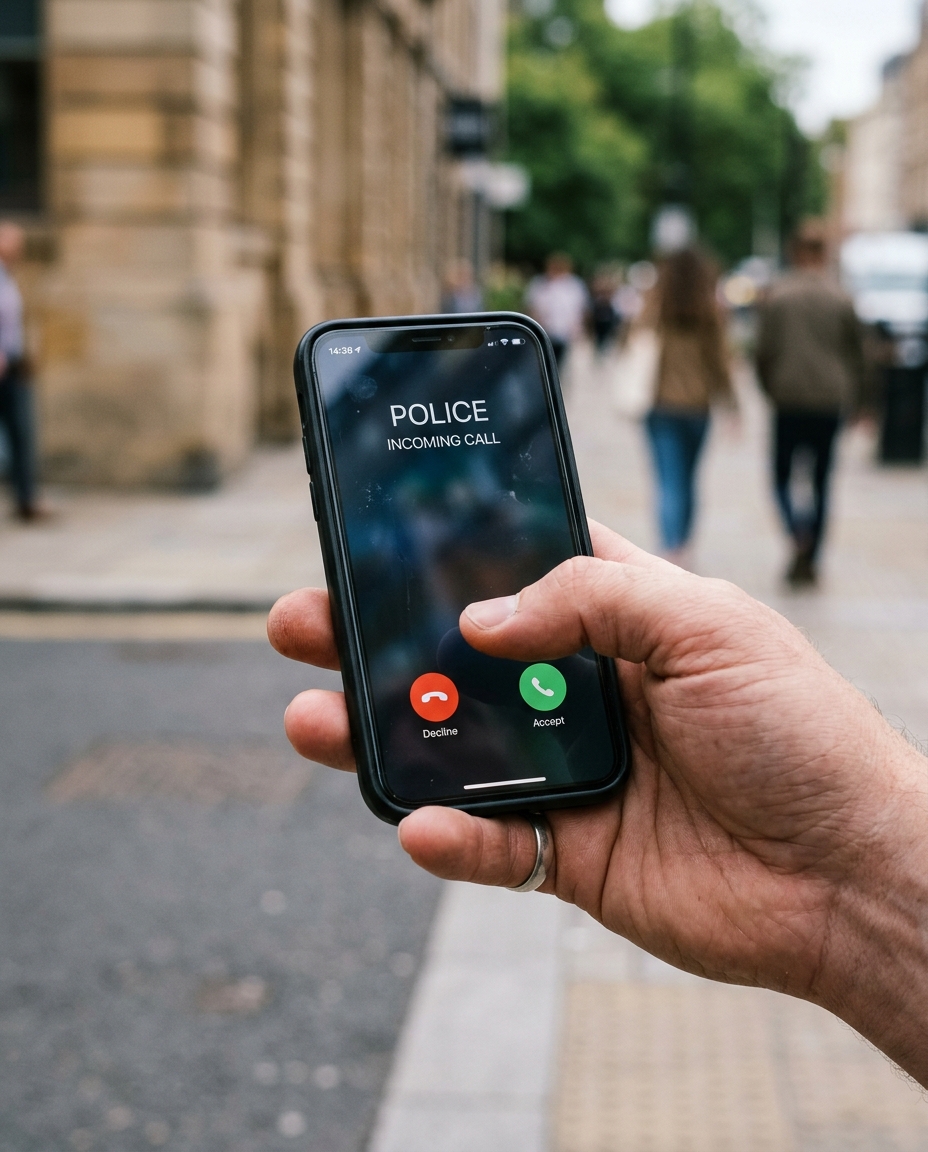
You pick up the phone and see your local police station number displayed on the screen. The caller introduces themselves as an officer, gives a badge number, and explains that your bank details have been compromised in an ongoing investigation. They sound direct, professional, and urgent.
Because your phone screen shows an official switchboard number that you can look up and confirm online, you might assume the call is genuine. But phone displays can no longer be relied on as proof of who is on the line.
Caller ID spoofing allows callers to display any telephone number they choose on your screen. Understanding how this works, and adopting a simple habit when answering unexpected calls, protects you before you share sensitive details or move money.
How can an official phone number be spoofed?
Caller ID display was built decades ago on technology that trusts the incoming call data provided by the calling network. Organisations such as hospitals, local councils, and switchboards use this capability legitimately so that outbound calls from individual desks show a central contact number instead of a direct personal extension.
Software available online now allows anyone to specify what number appears on the recipient screen. When an outbound call is placed, the service injects a chosen number into the caller ID field.
Your mobile network or landline provider simply displays the number passed to it by the incoming signal. The receiving phone has no built-in way to verify whether the caller has the legal right to use that number. As a result, a phone screen displaying a local police station switchboard or non-emergency line may be coming from anywhere in the world.
What did the official police warnings report?
UK police forces issued national warnings after observing a rise in telephone scams where callers impersonated officers using official switchboard numbers.
When we submitted this claim to Lucid, the check returned a verdict of Verified.
The evidence confirms that multiple regional forces and national crime prevention units have issued urgent public guidance. Reports published by TechTimes UK alongside alerts from UK Police Forces and Action Fraud document how these calls operate.
Callers typically inform the victim that their bank account is involved in a financial investigation, that counterfeit notes have been deposited in their name, or that an urgent payment is required to protect their savings. Because the number on the screen matches their local police station, people are far more likely to trust the instructions given.
Police forces emphasise that legitimate officers will never contact you out of the blue to ask for bank transfers, card details, PINs, or cash withdrawals.
How do you know if a police call is genuine?
Knowing how official organisations operate makes it much easier to spot an impersonation, regardless of what appears on your phone screen.
A genuine police officer or force representative will never:
* Ask you to transfer money to a safe account or a new sorting code. * Request your banking PIN, online passwords, or two-factor authentication codes. * Send a courier to your address to collect cash, payment cards, or high-value items. * Ask you to purchase gift cards, vouchers, or cryptocurrency. * Threaten you with immediate arrest over the phone if you do not make a payment right away.
If a caller makes any of these requests, the conversation is a scam attempt. It does not matter how polite the caller sounds or how accurate their badge details seem.
What practical steps should you take on an unexpected call?
If you receive a call from someone claiming to be from the police or your bank, follow these four steps:
1. Hang up immediately. You do not need to explain why or stay on the line to be polite. 2. Clear the line properly. On traditional landlines, callers can sometimes keep the line open for a short time after you put the receiver down. Wait at least five minutes, or make a quick call to a family member or friend first to make sure the line has cleared. 3. Contact the organisation directly. Call 101 for non-emergency police matters, or call your bank using the trusted telephone number printed on the back of your debit card or an official statement. 4. Report the incident. Let Action Fraud know about the attempt so patterns can be tracked across the country.
How can you check suspicious claims and contacts?
When an unexpected call, text, or email leaves you uncertain, you do not have to guess whether the information is real. With the Lucid app, you can check suspicious messages, verify links, and confirm news stories against reliable sources in seconds. It provides clear, evidence-based verdicts so you can make informed decisions before taking action.
Sources
* Report Fraud: Police forces being impersonated in scam calls * Northamptonshire Police: Report Fraud alert on spoofed phone numbers * TechTimes UK: UK police warn over spoofed number scams * Report Fraud: National home for reporting cyber crime and fraud